ethics
Articles (115)
My Affirmation of Superhumanity
Lincoln Cannon affirms advancing AI to enhance humanity toward superhumanity, challenging theologians’ accounts of dignity through Mormon theosis doctrine.
As One of Us
Tyranny may stem from myopia, but could a superintelligent empathetic singleton truly govern for all? Exploring why centralized power remains high risk.
The Vanguardism Trap
The vanguardism trap explains how rationalist claims to “clear thinking” can justify elite control over others—a pattern from Plato to Lenin to AI governance today.
New Africa Regional Presidency Appointed
New Africa regional presidency announced, with Jonathan Bolonda as President, Silvester Tsuma as Vice-President, and Keneth Isabirye as Advisor.
New God Argument Version 4.0
The New God Argument v4.0 offers a logical case for faith in God grounded in science and technology trends—proving that trust in superhuman potential implies trust in God.
Authors (7)

Ben Romney is a senior software engineer at Qualtrics. Outside of his professional career, he pursues his interest in moral philosophy. He presented at the MTAConf 2020 on his paper, “A Gradient Rubric for Human and Non-Human Utility,” available at bromney.com/ethicspaper.pdf. Romney’s work focuses on expanding ethical considerations beyond the human species to encompass animals, plants, and potentially robots, all in service of maximizing global happiness. He advocates for a utilitarian approach, proposing a gradient rubric to quantify various life forms’ capacity for happiness, aiming to prioritize efforts to improve the world for all sentient beings.

Brian Green is a scholar at Santa Clara University specializing in the intersection of transhumanism and Catholic ethics. His research explores the complex relationship between these seemingly disparate fields, seeking to identify areas of both conflict and potential collaboration. He has dedicated approximately a decade to this field of study, commencing with his master’s program at the Graduate Theological Union in Berkeley. His work aims to foster mutual understanding and dispel misconceptions between transhumanist and Christian communities. At the Religion and Transhumanism Conference 2014, Green addressed prevalent myths regarding the Catholic Church’s stance on life extension and human genetic manipulation, arguing for a more nuanced perspective that acknowledges the diversity within both transhumanism and Christianity. He advocates for identifying true points of tension and exploring potential alliances between these groups. Green’s research considers the justice implications of emerging technologies, and the practical challenges of achieving immortality. He seeks to encourage productive dialog that reconciles the benefits of emerging technologies with Catholic concerns for social justice, human dignity, and spiritual well-being.
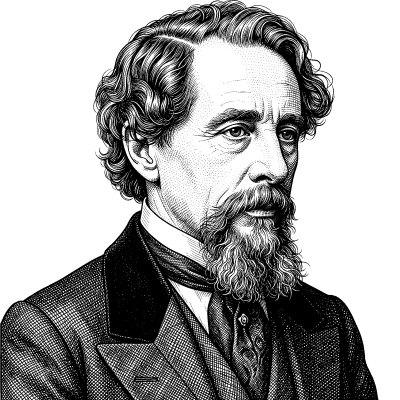
Charles Dickens
Charles John Huffam Dickens (1812-1870) stands as the most widely read English novelist of the Victorian era, a writer whose serialized fiction shaped how an entire society saw its own poverty, ambition, and capacity for change. Born in Portsmouth to a navy clerk whose debts landed the family in financial ruin, Dickens spent part of his boyhood laboring in a London boot-blacking factory while his father sat in debtors’ prison. That early exposure to want and humiliation never left his fiction, and it gave his later success an unusual moral urgency: he wrote not as an observer of the poor but as someone who had briefly been counted among them. Dickens built his career through serialization, publishing novels in monthly or weekly installments that reached readers across every social class. The Pickwick Papers made him famous almost overnight, and he followed it with Oliver Twist, Nicholas Nickleby, David Copperfield, Bleak House, Great Expectations, and A Tale of Two Cities, among many others. He also founded and edited periodicals, Household Words and All the Year Round, which let him pair fiction with journalism and social commentary in the same pages. His public readings, performed with theatrical intensity across Britain and America, turned authorship into a kind of ministry, delivered aloud to audiences who wept and laughed together. His fiction worked by insisting that character is not fixed. Ebenezer Scrooge’s transformation across a single night, prompted by visions of what he had been, was, and might yet become, remains the clearest statement of a conviction that runs through nearly everything Dickens wrote: that a human life, however hardened by circumstance or self-interest, retains the capacity to be remade. He gave that conviction institutional teeth, campaigning for sanitation reform, public education, and the abolition of debtors’ prisons, treating fiction as a lever for actual social transformation rather than mere entertainment. That conviction resonates with a Mormon transhumanist sense of human potential: the idea that growth has no fixed ceiling, that compassion toward the suffering is not sentiment but obligation, and that redemption is available to anyone willing to see differently. Dickens located his hope in moral imagination rather than in theology or technology, and he had no occasion to anticipate debates about engineered futures. But his lifelong case that people and the institutions they build can always become more generous than they currently are gives his work a natural kinship with the aspiration to a more compassionate, more fully realized humanity.
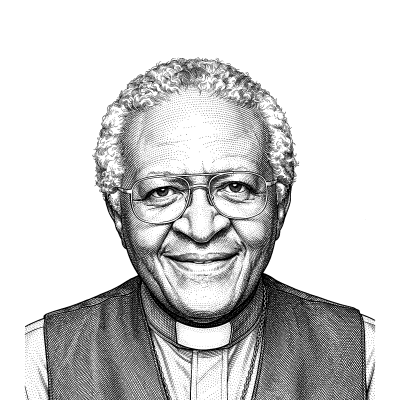
Desmond Tutu
Desmond Mpilo Tutu (1931-2021) was a South African Anglican archbishop who became one of the moral authorities of his century, leading nonviolent resistance to apartheid and later guiding his country through the painful work of reckoning with what apartheid had done. Born in Klerksdorp to a schoolteacher father and a domestic-worker mother, he trained first as a teacher before entering the priesthood, ordained in 1960. He became Bishop of Lesotho in 1976, then Bishop of Johannesburg, and in 1986 became the first Black Archbishop of Cape Town, using the pulpit and the press with equal skill to make apartheid’s injustice visible to a world that preferred not to look. Tutu’s resistance stayed deliberately nonviolent even as the system he opposed grew more brutal, a discipline that cost him surveillance, threats, and the revocation of his passport, and that earned him the Nobel Peace Prize in 1984. After apartheid fell, Nelson Mandela appointed him to chair the Truth and Reconciliation Commission, where he insisted that justice required truth-telling before it could require forgiveness, and that forgiveness, rightly understood, was not an erasure of harm but a costly act of repair. He also popularized the Zulu-rooted concept of ubuntu for audiences well beyond South Africa, teaching that personhood is not a private possession but something realized only through other people. That teaching, captured in his own words, that his humanity is bound up in others’ humanity, for people can only be human together, names a relational view of personhood that resonates with a Mormon transhumanist emphasis on growth achieved in community rather than isolation. Tutu held that every person carries the image of God, and that cruelty against one person wounds that image everywhere. His life’s work, holding truth and reconciliation together rather than letting either substitute for the other, offers a model of moral seriousness for any tradition that hopes human beings might yet become more fully what they were created to be.

Evan McMullin
Evan McMullin (b. 1976) is an American politician, intelligence officer, and civic leader whose career has been defined by a commitment to democratic principles, moral courage, and service to the common good. Born in Provo, Utah, and a member of The Church of Jesus Christ of Latter-day Saints, McMullin served as a clandestine operations officer with the CIA for over a decade, working in counter-terrorism and national security across the Middle East and North Africa. He later served as Chief Policy Director for the House Republican Conference before launching an independent presidential campaign in 2016, earning 21% of the vote in Utah and drawing national attention as a principled alternative to the major-party candidates. McMullin’s public life has centered on the defense of constitutional democracy and human dignity against authoritarian impulses. In 2021, he co-founded the anti-authoritarian organization Stand Up Republic, and in 2022 he ran as an independent candidate for U.S. Senate in Utah, earning broad cross-partisan support. His advocacy consistently draws on moral foundations rooted in his faith, framing democratic participation and the protection of individual rights as ethical imperatives rather than merely political ones. McMullin’s career reflects a conviction that intelligence, courage, and moral clarity are inseparable—that the work of protecting human dignity requires both rigorous discernment and principled action. His willingness to challenge concentrated power and defend pluralistic institutions resonates with the Mormon transhumanist commitment to decentralized flourishing and the notion that genuine community requires consent, accountability, and the active participation of morally engaged individuals. In an era when technology increasingly mediates political power, McMullin’s insistence on transparency and ethical responsibility points toward the kind of stewardship that responsible technological progress demands.
Quotations (4)
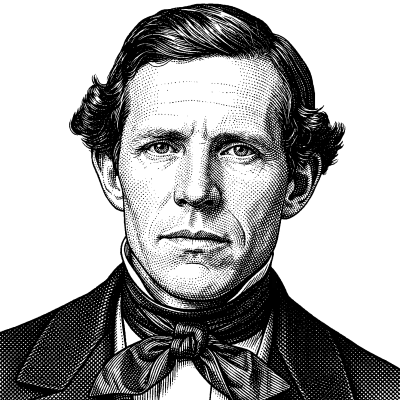
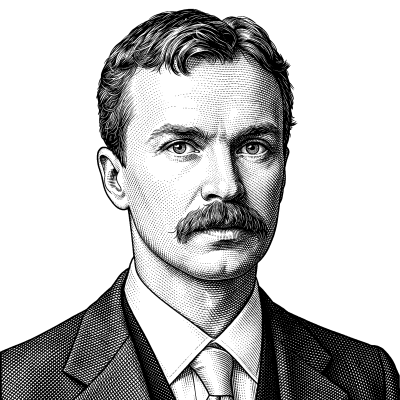 William James