creation
Articles (35)
Without Beginning
Explore how time travel, Mormon theology, and quantum physics intersect in a fascinating examination of recursive creation, indefinite divine regress, and the nature of reality beyond simple causation.
The Veil Is Individuation
In Mormon theology, the veil isn’t merely forgetting—it’s individuation, the sacred process by which God differentiates into more Gods. Explore this profound reframing.
Witnesses to the Creative Power of Prophecy
Discover how prophecy is not fate but a blueprint for creation. Don Bradley’s essay reframes religious futurism, urging courageous hope and active collaboration with God.
Bayesian Generalized Simulation Argument and Calculator
Explore a Bayesian formulation of the generalized Simulation Argument with an interactive calculator. Are we living in a created world or headed for doom? Dive in.
Humanity’s Past and Distant Future
Carl Youngblood presents to MTA members in Abidjan, arguing that transhumanism is deeply familiar to Latter-day Saints when properly understood.
Quotations (7)
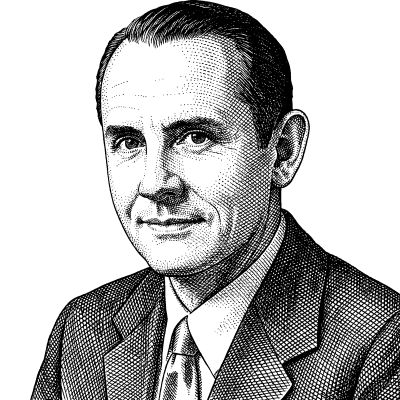 Spencer W. Kimball
Topical Guide (7)
See all 7 resultsVideos (4)
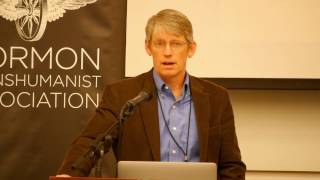
George Handley
Caring for Creation: an LDS Perspective
George Handley outlines ten distinctive LDS doctrines that provide theological resources for environmental stewardship, including the belief that Earth is humanity’s intended eternal home rather than a mere way station, that bodies and sensory experience are to be treasured, and that all life forms were created spiritually before physically and are entitled to “multiply and replenish.” He emphasizes that LDS teachings on creation from unorganized matter (rather than ex nihilo) imply reverence for natural processes, while scriptures like the Word of Wisdom and the Law of Consecration mandate eating locally, consuming sparingly, and redistributing resources to the poor. Handley argues that the Anthropocene demands Latter-day Saints bring together both scientific literacy and religious values to adequately respond to environmental challenges.
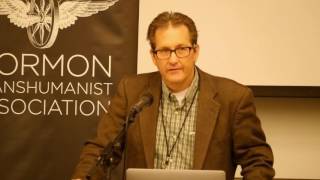
Steven Peck
The Evolution of Novelty in an Open Universe: Requiem for Laplace’s Demon
Steven Peck challenges the deterministic “block universe” of Laplace’s demon, arguing that genuine randomness—rooted in quantum events—bubbles up through biology to create an open, evolving cosmos. Drawing on chaos theory, emergence, and evolutionary biology, he contends that novelty is continuously generated in ways that were never predetermined at the Big Bang. For Peck, this openness has profound theological implications: if God has an embodied, biological nature, then faith, hope, and charity are not merely earthly virtues but eternal necessities for navigating a universe where the future remains genuinely unwritten.
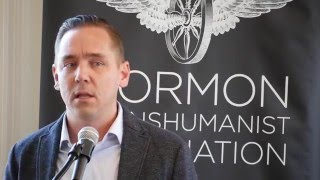
Joseph West
An open letter to the lost children of Mormonism
Joseph West addresses the “lost children of Mormonism” through Nietzsche’s parable of the camel, lion, and child. The camel gladly bears burdens; the lion rebels against old values with a sacred “no”; but only the child can offer the sacred “yes” needed for genuine creation. West argues that Mormonism’s radical heritage—alternative family structures, innovative economics, the belief that humans can become gods—was suppressed when the community capitulated to mainstream American values. He calls for reconciliation between faithful “camels” and disaffected “lions,” urging both to seek the “sacred feminine” wisdom that can guide them out of the wilderness.
Lincoln Cannon
Trust in Posthumanity and the New God Argument
Lincoln Cannon presents the New God Argument, a logical framework demonstrating that trust in humanity’s posthuman potential should lead to faith in God. The argument combines three sub-arguments: the angel argument (if prehumans are probable, posthumans probably already exist), the benevolence argument (posthumans are probably more benevolent than us), and the creation argument (posthumans probably created our world). Cannon shows how this reasoning aligns with Mormon theology—particularly Joseph Smith’s teaching that God was once as we are now—and responds to Richard Dawkins’s observation that sufficiently advanced extraterrestrials would be indistinguishable from gods.