zion
Articles (7)
As One of Us
Tyranny may stem from myopia, but could a superintelligent empathetic singleton truly govern for all? Exploring why centralized power remains high risk.
What If It All Works Out?
Lincoln Cannon asks: what if the best prophecies are fulfilled and the worst avoided? Imagining what heaven on Earth looks like when transhumanist ideals work.
Transhumanist Holy Week: Palm Sunday
Caleb Jones explores Palm Sunday's themes of triumph and peace—showing how technology fulfills prophetic visions of healing and resurrection in God's Kingdom.
Mormon Projections on Superintelligent Communities
Lincoln Cannon applies Mormon theology to transhumanist visions of superintelligent communities—exploring indefinite life, evolved ethics, and divine potential.
A Vision Worth Believing In: Transhumanism, Driven By Spiritual and Ethical Progress
Jon Ogden argues that transhumanism, guided by spiritual and ethical progress, offers a compelling vision of humanity transcending limitations toward paradise.
Authors (2)
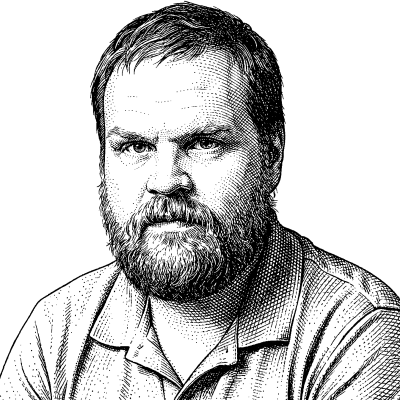
Allen Hansen was raised in northern Israel within the LDS faith, an experience that has profoundly shaped his academic and personal interests. His interdisciplinary scholarship spans a wide range of subjects, reflecting his diverse background and intellectual curiosity. Hansen’s research interests are particularly focused on the intersection of Mormonism, Judaism, and Biblical studies, with a keen interest in late antiquity. He also has scholarly interests in journalism, as well as Eastern European and Middle Eastern studies. This breadth allows him to explore unique connections between seemingly disparate fields. Hansen also brings a practical dimension to his scholarship through interests in business management and positive psychology, both of which he frames through the lens of Zion — exploring how organizational design and individual well-being might serve a larger communal vision. This thread of his work aligns naturally with the Mormon Transhumanist Association’s broader project of bridging faith and posthumanism.

Charles Randall Paul is the founder and president of the Foundation for Religious Diplomacy, an organization based in New York and Utah dedicated to fostering trust between religious critics and rivals. Recognizing the need for constructive online dialogue, he co-founded The World Table, a software platform designed to facilitate respectful conversations on the internet. Paul’s academic background spans diverse fields. He holds a B.S. in Social Psychology from Brigham Young University, an MBA from Harvard University, and a Ph.D. from the University of Chicago Committee on Social Thought. This interdisciplinary approach informs his work on religious diplomacy and online discourse. Prior to his academic pursuits, Paul had a career as a commercial real estate developer. Influenced by thinkers such as William James, Jonathan Haidt, and Chantal Mouffe, Paul’s work explores themes of radical empiricism, personalism, and agonistic pluralism. His perspectives, rooted in Mormon theology and Joseph Smith’s notions of Zion, challenge conventional assumptions about knowledge and behavior, especially in the context of conflict and cooperation. He draws insight from the Mormon mythological example of the war in heaven, highlighting that knowledge doesn’t necessarily ensure moral behavior. Paul is married to Jan, and together they have five children and fifteen grandchildren.
Quotations (5)
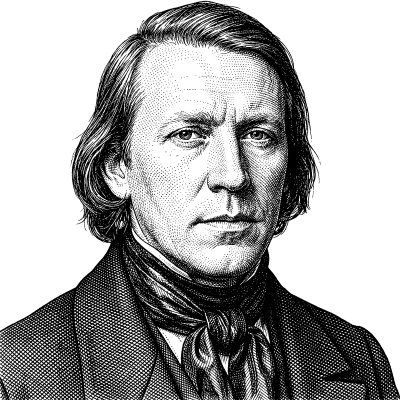 Brigham Young
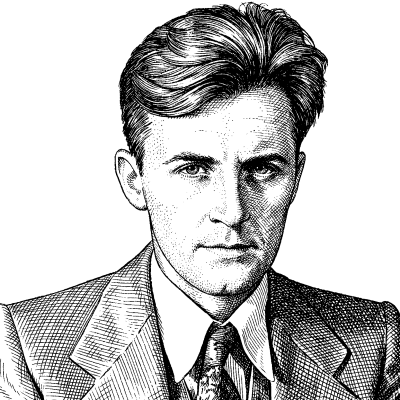 Hugh Nibley