pragmatism
Articles (17)
Embody Christmas
Lincoln Cannon reflects on Christmas as a call to embodiment, meditating on the manger, the stable, and what incarnate faith means for a transhumanist.
Financial Nihilism Strengthens Crypto
Lincoln Cannon argues cycles of financial nihilism in crypto ultimately strengthen the ecosystem, separating serious builders from speculative degens.
Faith in the Future
Carl Youngblood presents 'Faith in the Future' at TransVision Abidjan 2025—a vision of pragmatic trust in our divine capacity to navigate great challenges.
Marek Wójtowicz on the New God Argument
Lincoln Cannon responds to philosopher Marek Wójtowicz’s formal critique of the New God Argument, published in Roczniki Filozoficzne.
The Practical Power of Created Truth
Lincoln Cannon challenges the pursuit of rigid truth, arguing how we conceive truth shapes its power—and that created truth carries its own practical force.
Authors (2)
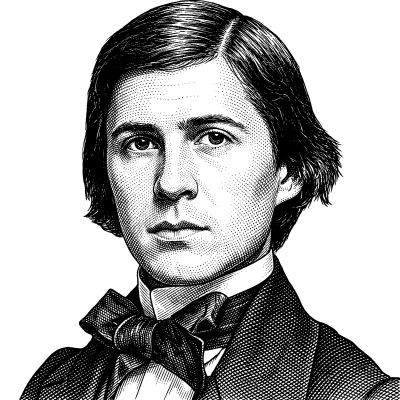
Charles Sanders Peirce
Charles Sanders Peirce (1839–1914) was an American philosopher, logician, mathematician, and scientist, widely regarded as the founder of pragmatism and one of the most original minds in the history of Western philosophy. Though he spent much of his career in relative institutional isolation—he held no permanent academic post and much of his work was published only posthumously—his influence on logic, semiotics, epistemology, and the philosophy of science has proven immense. Peirce was educated at Harvard and worked for decades with the U.S. Coast and Geodetic Survey, conducting pioneering research in geodesy and the measurement of gravity. In parallel, he developed a sweeping philosophical system he called “synechism”—the view that continuity is a fundamental feature of reality—alongside “tychism,” the doctrine that genuine chance is real and irreducible in the cosmos. These were not idle speculations but part of a rigorous effort to understand how mind, matter, meaning, and evolution are woven together. His theory of signs (semiotics) proposed that all thought is mediated by signs, making inquiry itself a kind of living, self-correcting process oriented toward truth. Peirce’s cosmological vision is among the most theologically resonant in the American philosophical tradition. He argued that the universe itself is a process of mind coming to know itself—that evolution, continuity, and the growth of reasonableness are not merely biological or physical facts but expressions of a cosmic tendency toward greater intelligence, order, and love. He described this tendency with the term “agapasm”: evolutionary love as the animating force of the universe. In this light, his remark that creation’s purpose, in its highest expression, is “God’s movement toward self-reproduction” is not a peripheral aside but a central conviction—that the cosmos is oriented toward the emergence and amplification of mind, and that intelligence, creativity, and moral aspiration are participations in something genuinely divine. For those who hold that humanity’s destiny is theosis—transformation into ever greater intelligence, compassion, and creative power—Peirce’s cosmology offers a richly consonant philosophical foundation.
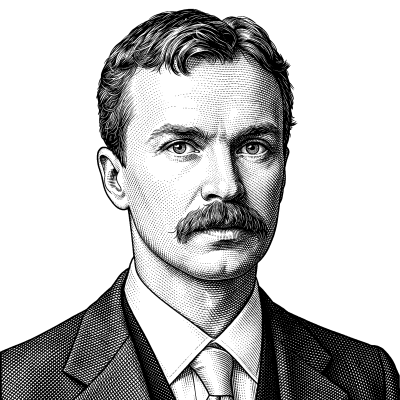
William James
William James (1842–1910) was an American philosopher and psychologist, widely regarded as the father of American psychology and one of the most influential thinkers of the nineteenth and early twentieth centuries. A founding figure of pragmatism, James taught at Harvard for decades, where his work shaped philosophy, psychology, and the study of religion in ways that continue to reverberate. James’s contributions span an extraordinary range. His landmark Principles of Psychology (1890) established psychology as a rigorous empirical discipline. His philosophical writings—including The Will to Believe , Pragmatism , and A Pluralistic Universe —developed a vision of truth as something made rather than merely found, tested in lived experience and practical consequence. In The Varieties of Religious Experience (1902), he brought the same empirical seriousness to mysticism, conversion, and faith, treating religious experience as genuine data about human consciousness and its possibilities. What animates James’s legacy, and gives it enduring resonance, is his insistence that ideas must be tested against the full weight of human life—its dangers, its moral demands, its capacity for transformation. His account of the “strenuous mood”—the awakening of our deepest energies in response to genuine stakes and infinite demands—captures something essential about the relationship between faith and moral agency. For James, a world without God risks collapsing into a “don’t-care” temperament; religious faith, by opening an infinite scale of obligation and possibility, frees “every sort of energy and endurance, of courage and capacity for handling life’s evils.” This is not theology as mere comfort but as a spur to transformation. His vision of cooperative moral adventure—a world whose perfection is “conditional merely” on whether each agent does their “level best”—frames human existence as a genuinely open, participatory project, one where trust, risk, and collaborative effort are constitutive of whatever good is achieved. That vision sits naturally alongside Mormon transhumanist convictions about theosis, participatory atonement, and humanity’s co-creative role in its own divine future.
Quotations (14)
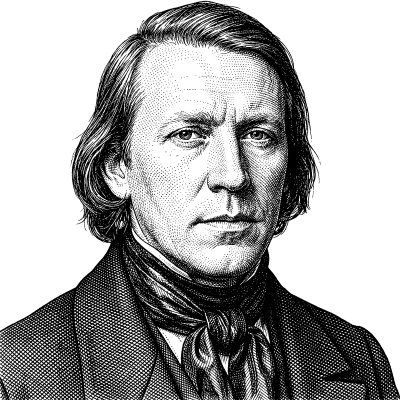 Brigham YoungWilliam James
 L. Tom Perry