religion
Articles (136)
In Memory of Mike LaTorra
Remembering Mike LaTorra: Zen Buddhist priest, English professor, and transhumanist visionary who helped legitimize Mormon Transhumanism and bridged spiritual traditions.
The Urgency of Superintelligent Communion
Lincoln Cannon argues theosis in Mormon Transhumanism is communal, not individual—making superintelligent communion an existential imperative, not a nicety.
Witnesses to the Creative Power of Prophecy
Discover how prophecy is not fate but a blueprint for creation. Don Bradley’s essay reframes religious futurism, urging courageous hope and active collaboration with God.
Reflections on a Pivotal Year
Carl Youngblood reflects on a pivotal year — examining society's relationship with generosity, technology, faith, and intelligence at a critical moment.
Steven Christiansen appointed Global Vice President & COO
The MTA appoints Steven Christiansen — Provo Chapter President — as Global Vice President and COO, expanding the organization's leadership team.
Authors (2)
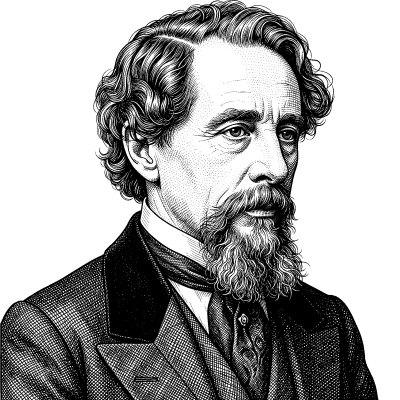
Charles Dickens
Charles John Huffam Dickens (1812-1870) stands as the most widely read English novelist of the Victorian era, a writer whose serialized fiction shaped how an entire society saw its own poverty, ambition, and capacity for change. Born in Portsmouth to a navy clerk whose debts landed the family in financial ruin, Dickens spent part of his boyhood laboring in a London boot-blacking factory while his father sat in debtors’ prison. That early exposure to want and humiliation never left his fiction, and it gave his later success an unusual moral urgency: he wrote not as an observer of the poor but as someone who had briefly been counted among them. Dickens built his career through serialization, publishing novels in monthly or weekly installments that reached readers across every social class. The Pickwick Papers made him famous almost overnight, and he followed it with Oliver Twist, Nicholas Nickleby, David Copperfield, Bleak House, Great Expectations, and A Tale of Two Cities, among many others. He also founded and edited periodicals, Household Words and All the Year Round, which let him pair fiction with journalism and social commentary in the same pages. His public readings, performed with theatrical intensity across Britain and America, turned authorship into a kind of ministry, delivered aloud to audiences who wept and laughed together. His fiction worked by insisting that character is not fixed. Ebenezer Scrooge’s transformation across a single night, prompted by visions of what he had been, was, and might yet become, remains the clearest statement of a conviction that runs through nearly everything Dickens wrote: that a human life, however hardened by circumstance or self-interest, retains the capacity to be remade. He gave that conviction institutional teeth, campaigning for sanitation reform, public education, and the abolition of debtors’ prisons, treating fiction as a lever for actual social transformation rather than mere entertainment. That conviction resonates with a Mormon transhumanist sense of human potential: the idea that growth has no fixed ceiling, that compassion toward the suffering is not sentiment but obligation, and that redemption is available to anyone willing to see differently. Dickens located his hope in moral imagination rather than in theology or technology, and he had no occasion to anticipate debates about engineered futures. But his lifelong case that people and the institutions they build can always become more generous than they currently are gives his work a natural kinship with the aspiration to a more compassionate, more fully realized humanity.

Jason Anthony is a religion journalist and games designer based in New York City. He brings a unique perspective to discussions of next-generation religion, shaped by his diverse experiences and intellectual curiosity. Anthony’s career has spanned various aspects of the media landscape. He has served as the editor of America’s oldest religious magazine and written extensively about the national faith landscape. His observations and reflections following the events of September 11th at the World Trade Center—where he witnessed the intense religious reactions and motivations—led him to delve deeper into the study of religion. Driven by both personal experience and the evolving media landscape, Anthony’s work now extends to the realm of game design. This exploration is epitomized by his project, “The Ten Year Game,” an initiative through which he explores future religious frameworks. Anthony’s involvement in business writing and familiarity with both legal and illegal gambling traditions further enrich his understanding of complex systems and human behavior, lending a multifaceted perspective to his projects.
Quotations (4)
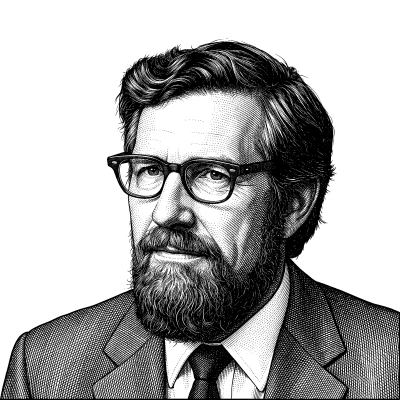 Clifford Geertz
Topical Guide (3)
Videos (24)
Rachael Givens Johnson
Incarnation: Some Theological-Historical Notes
In an age of seemingly endless possibilities for modifying our bodies, this presentation explores the value of limited embodiment, arguing that constraints and limitations may be prerequisites for cultivating joy, freedom, and connection rather than obstacles to overcome. Drawing on Brian Kershisnik’s painting “Dancing on a Very Small Island,” the speaker examines how recent cognitive science has undergone an “embodied makeover,” recognizing intelligence as embodied, embedded, enacted, and extended. The talk raises theological questions from the Latter-day Saint tradition—particularly Joseph Smith’s vision of resurrection as precise bodily restoration—suggesting that progress might paradoxically occur through condescension, sacrifice, and abnegation rather than purely through increasing autonomy and agency.
Jonathan Jardine
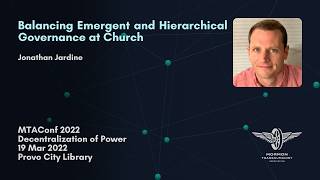
Balancing Emergent and Hierarchical Governance at Church
Jonathan Jardine, drawing on Clay Christensen’s strategic frameworks, examines how decentralization of church practice—not doctrine—can help build Zion. He traces LDS innovations like seminaries, the Primary, and the welfare program back to emergent strategies that bubbled up from local leaders solving real problems, later adopted and standardized by general authorities. Jardine contrasts this with recent decades’ shift toward deliberate, centrally planned initiatives, arguing that the church needs both approaches and should empower members to exercise their “spiritual muscles” through local innovation.
Don Bradley
“Raise Up Seed to Thy Brother”- The Ideologically Levirate Marriage of Joseph, Emma, & Alvin Smith
This presentation proposes that Joseph Smith believed his firstborn son Alvin held special rights to the golden plates because Joseph saw himself as fulfilling the biblical levirate law—raising up seed to his deceased brother Alvin, who had been present when Moroni first appeared and died shortly thereafter. The speaker uses abductive reasoning to argue that Joseph’s marriage to Emma was itself an adaptation of this ancient practice, making their union spiritually polygamous from the start. This hypothesis offers explanatory power for several puzzles in early Mormon history, including Joseph’s outsized expectations for his firstborn son, his need to marry Emma before obtaining the plates, and the later development of proxy work for the dead and plural marriage.
Chris Bradford
Open Thou Mine Eyes
Chris Bradford explores the tension between technological instrumentalism and genuine human relationship, drawing on Martin Buber’s distinction between “I-It” and “I-Thou” encounters. He argues that a purely technological approach to the world risks reducing people and nature to mere objects, and that Mormon transhumanism must complement its technological aspirations with the cultivation of empathy, charity, and recognition of the divine in others. Bradford contends that the grace saturating the world—visible when our “eyes are opened”—calls disciples of Christ to see and serve God in every neighbor, making the transhumanist project a fundamentally religious endeavor.
Ben Blair
The God of Transcending Narratives
This presentation examines how communal narratives function in religious communities, arguing that God consistently bursts self-assured narratives rather than confirming them—as seen in Moses’s life being repeatedly disrupted from Egyptian prince to fugitive to prophet. The speaker critiques both the LDS Church’s institutional narrative and ex-Mormon counter-narratives for missing the “sought goods” that justify any narrative, suggesting that disputes over historical and doctrinal claims miss the more essential question of whether these structures actually deliver salvation. Mormon transhumanism offers a framework where religious aspirations like immortality and eternal life need not remain abstract mysteries but can become serious goals with practical benchmarks, transforming narratives from self-justifying stories into accountable claims measured against real outcomes.