love
Articles (45)
As One of Us
Tyranny may stem from myopia, but could a superintelligent empathetic singleton truly govern for all? Exploring why centralized power remains high risk.
New Africa Regional Presidency Appointed
New Africa regional presidency announced, with Jonathan Bolonda as President, Silvester Tsuma as Vice-President, and Keneth Isabirye as Advisor.
Transhumanist Holy Week: Maundy Thursday
Caleb Jones on Maundy Thursday—how Jesus washing feet challenges transhumanists to center service, vulnerability, and compassion alongside technology's power.
The Urgency of Superintelligent Communion
Lincoln Cannon argues theosis in Mormon Transhumanism is communal, not individual—making superintelligent communion an existential imperative, not a nicety.
Reflections on a Pivotal Year
Carl Youngblood reflects on a pivotal year — examining society's relationship with generosity, technology, faith, and intelligence at a critical moment.
Authors (1)
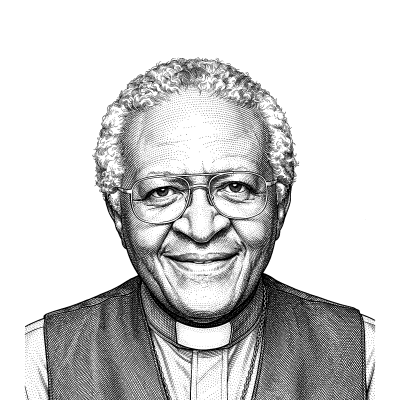
Desmond Tutu
Desmond Mpilo Tutu (1931-2021) was a South African Anglican archbishop who became one of the moral authorities of his century, leading nonviolent resistance to apartheid and later guiding his country through the painful work of reckoning with what apartheid had done. Born in Klerksdorp to a schoolteacher father and a domestic-worker mother, he trained first as a teacher before entering the priesthood, ordained in 1960. He became Bishop of Lesotho in 1976, then Bishop of Johannesburg, and in 1986 became the first Black Archbishop of Cape Town, using the pulpit and the press with equal skill to make apartheid’s injustice visible to a world that preferred not to look. Tutu’s resistance stayed deliberately nonviolent even as the system he opposed grew more brutal, a discipline that cost him surveillance, threats, and the revocation of his passport, and that earned him the Nobel Peace Prize in 1984. After apartheid fell, Nelson Mandela appointed him to chair the Truth and Reconciliation Commission, where he insisted that justice required truth-telling before it could require forgiveness, and that forgiveness, rightly understood, was not an erasure of harm but a costly act of repair. He also popularized the Zulu-rooted concept of ubuntu for audiences well beyond South Africa, teaching that personhood is not a private possession but something realized only through other people. That teaching, captured in his own words, that his humanity is bound up in others’ humanity, for people can only be human together, names a relational view of personhood that resonates with a Mormon transhumanist emphasis on growth achieved in community rather than isolation. Tutu held that every person carries the image of God, and that cruelty against one person wounds that image everywhere. His life’s work, holding truth and reconciliation together rather than letting either substitute for the other, offers a model of moral seriousness for any tradition that hopes human beings might yet become more fully what they were created to be.
Quotations (12)
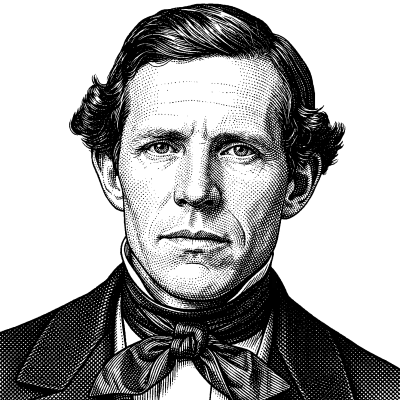 Joseph Smith
 Russell M. Nelson
Topical Guide (5)
Videos (2)
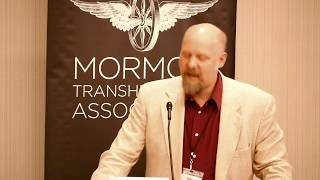
Chris Bradford
Open Thou Mine Eyes
Chris Bradford explores the tension between technological instrumentalism and genuine human relationship, drawing on Martin Buber’s distinction between “I-It” and “I-Thou” encounters. He argues that a purely technological approach to the world risks reducing people and nature to mere objects, and that Mormon transhumanism must complement its technological aspirations with the cultivation of empathy, charity, and recognition of the divine in others. Bradford contends that the grace saturating the world—visible when our “eyes are opened”—calls disciples of Christ to see and serve God in every neighbor, making the transhumanist project a fundamentally religious endeavor.
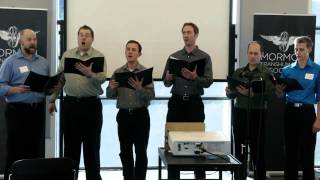
You Are the New Day
The MTA Barbershop Chorus performs John Rutter’s “You Are the New Day,” a hymn of hope and renewal. Introduced by a reflection on humanity’s responsibility to shape the future through “good minds and loving hearts,” the performance celebrates themes of love, life, and the dawning possibility of each new day—affirming that hope persists even when time seems to be running out.