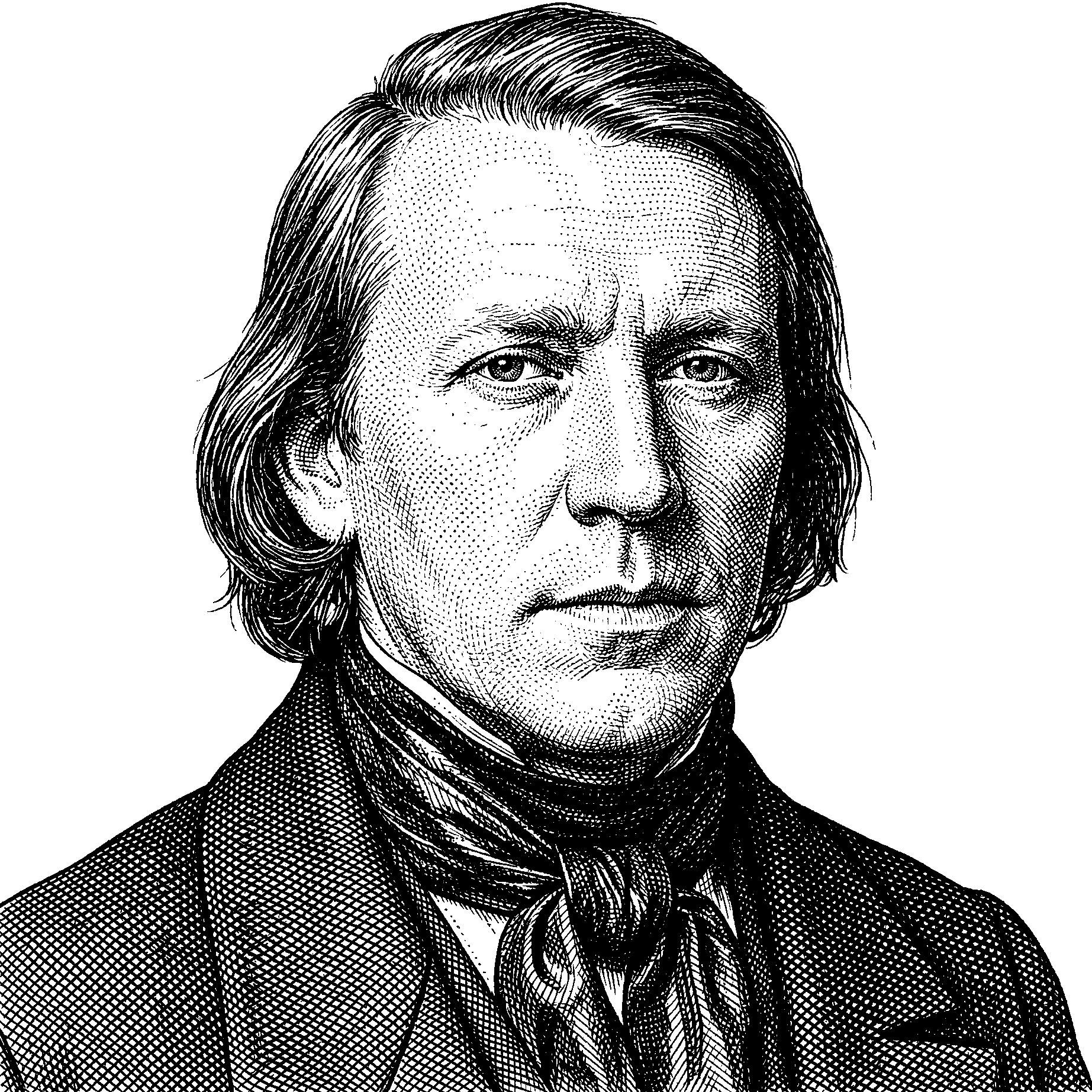
Stephen L. Richards on Harmonization

The time of creation has ever been a subject of much comment and dispute. Yet I challenge anybody to produce from the Bible itself any finite limitation whatsoever of the periods of creation. By strained inferential references and interpretations men have sought to set the time in days or periods of a thousand years, but I feel sure that no justification of such limitations is warranted by the scriptures themselves. If the evolutionary hypothesis of the creation of life and matter in the universe is ultimately found to be correct, and I shall neither be disappointed nor displeased if it shall turn out so to be, in my humble opinion the Biblical account is sufficiently comprehensive to include the whole of the process.

An Open Letter to College Students, Improvement Era, pages 484-485, 1933.06

Related Quotes

Steven DickSteven Dick

[Future religious thinkers] must be open to radically new conceptions of God, not necessarily the God of the ancients, nor the God of human imagination, but a God grounded in cosmic evolution, the biological universe, and the three principles: Why would a Messiah only come to us? Humans are likely not the center of anything. Nor the ultimate creation of God (likely not the head of the class when it comes to brainpower and intelligence) . . . A major effect of the concept of a natural God is that it has the capacity to reconcile science and religion. For those with a vested interest in the supernatural God of most standard religions, this may be too great a sacrifice for reconciliation. But consider the benefits. A natural God is an intelligence in and of the world, a God amenable to scientific methods, or at least approachable by them. A supernatural God incorporates a concept all scientists reject in connection with their science. For some, this may be precisely the point: that God cannot be, and should not be, approachable by science. But for Einstein and many other scientists (perhaps expressed in a different way for the latter) “the cosmic religious feeling is the strongest and noblest motive for scientific research.”

Brigham YoungBrigham Young

I have heard ministers of the gospel declare that they believed every word in the Bible was the word of God. I have said to them, “You believe more than I do. I believe the words of God are there; I believe the words of the devil are there; I believe that the words of men and the words of angels are there; and that is not all—I believe that the words of a dumb brute are there. I recollect one of the prophets riding, and prophesying against Israel, and the animal he rode rebuked his madness.”

Hugh B. BrownHugh B. Brown

It seems obvious that the scriptures were not intended as texts in biology, anthropology, geology or any other of the sciences.

More from Stephen L. Richards