Richard Dawkins on Naturalism

Richard Dawkins

Richard Dawkins

Whether we ever get to know them or not, there are very probably alien civilizations that are superhuman, to the point of being god-like in ways that exceed anything a theologian could possibly imagine. Their technical achievements would seem as supernatural to us as ours would seem to a Dark Age peasant transported to the twenty-first century. Imagine his response to a laptop computer, a mobile telephone, a hydrogen bomb or a jumbo jet. As Arthur C. Clarke put it, in his Third Law: “Any sufficiently advanced technology is indistinguishable from magic.” The miracles wrought by our technology would have seemed to the ancients no less remarkable than the tales of Moses parting the waters, or Jesus walking upon them. The aliens of our SETI signal would be to us like gods, just as missionaries were treated as gods (and exploited the undeserved honour to the hilt) when they turned up in Stone Age cultures bearing guns, telescopes, matches, and almanacs predicting eclipses to the second.

In what sense, then, would the most advanced SETI aliens not be gods? In what sense would they be superhuman but not supernatural? In a very important sense, which goes to the heart of this book. The crucial difference between gods and god-like extraterrestrials lies not in their properties but in their provenance. Entities that are complex emough to be intelligent are products of an evolutionary process. No matter how god-like they may seem when we encounter them, they didn’t start that way. Science-fiction authors, such as Daniel F. Galouye in Counterfeit World, have even suggested (and I cannot think how to disprove it) that we live in a computer simulation, set up by some vastly superior civilization. But the simulators themselves would have to come from somewhere. The laws of probability forbid all notions of their spontaneously appearing without simpler antecedents. They probably owe their existence to a (perhaps unfamiliar) version of Darwinian evolution . . .
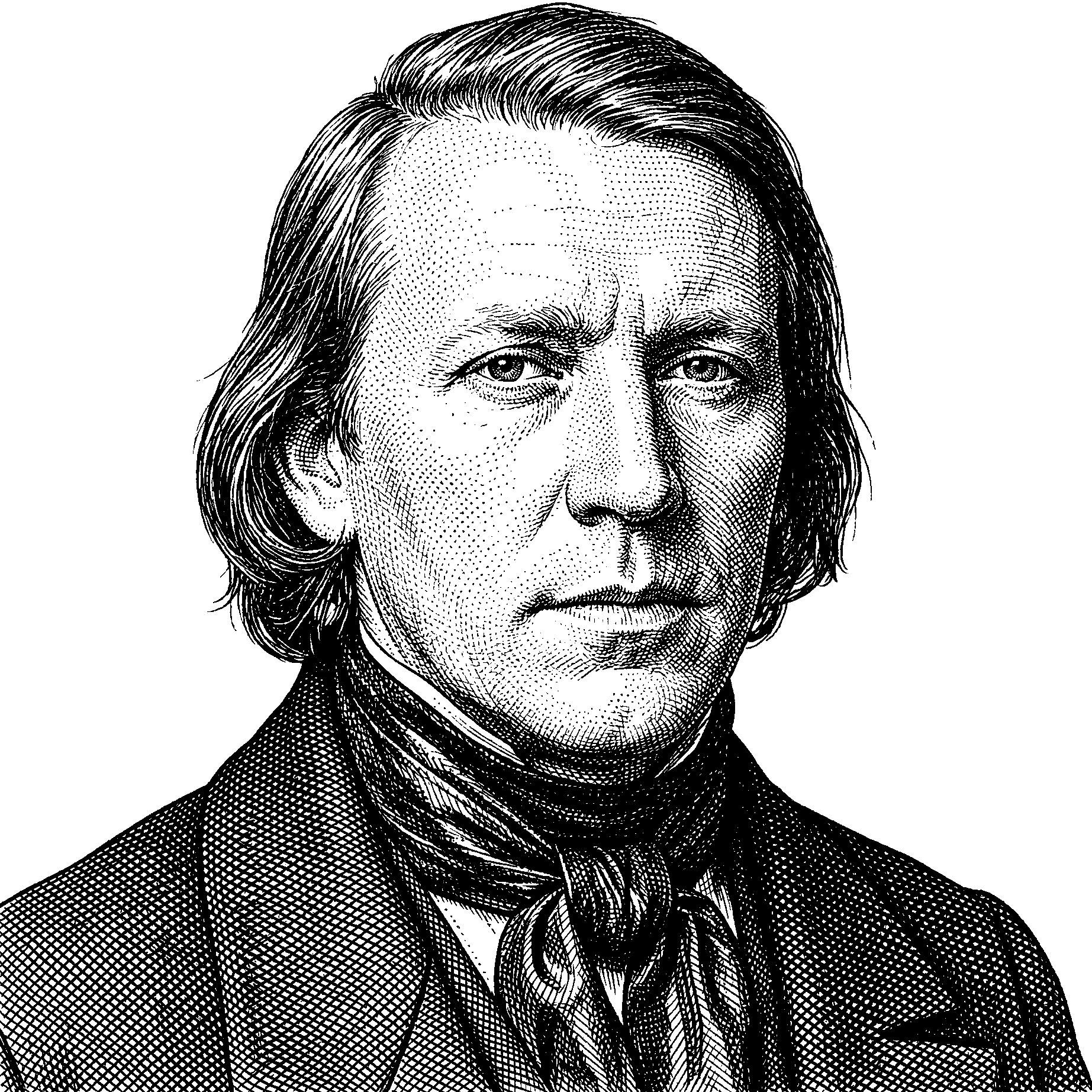

The God Delusion, pages 98-99, New York: Mariner Books, 2006

Related Quotes

Brigham YoungBrigham Young

Yet I will say with regard to miracles, there is no such thing save to the ignorant—that is, there never was a result wrought out by God or by any of His creatures without there being a cause for it. There may be results, the causes of which we do not see or understand, and what we call miracles are no more than this—they are the results or effects of causes hidden from our understandings.

James E. TalmageJames E. Talmage

Some of the latest and highest achievements of man in the utilization of natural forces approach the conditions of spiritual operations. To count the ticking of a watch thousands of miles away; to speak in but an ordinary tone and be heard across the continent; to signal from one hemisphere and be understood on the other though oceans roll and roar between; to bring the lightning into our homes and make it serve as fire and torch; to navigate the air and to travel beneath the ocean surface; to make chemical and atomic energies obey our will—are not these miracles?

B. H. RobertsB. H. Roberts

I believe also that with this flood of knowledge concerning these highly spiritual things, there has come into the world, almost imperceptibly, a more generally diffused and brighter spirit of intelligence than was known before; like collateral rays shooting off to right and left from the more direct light of God’s revelations which ushered in the great work of the last days.

More from Richard Dawkins

I am not advocating some sort of narrowly scientistic way of thinking. But the very least that any honest quest for truth must have in setting out to explain such monstrosities of improbability as a rainforest, a coral reef, or a universe is a crane and not a skyhook. The crane doesn’t have to be natural selection. Admittedly, nobody has ever thought of a better one. But there could be others yet to be discovered . . . It may even be a superhuman designer—but, if so, it will almost certainly not be a designer who just popped into existence, or who always existed. If (which I don’t believe for a moment) our universe was designed, and a fortiori if the designer reads our thoughts and hands out omniscient advice, forgiveness and redemption, the designer himself must be the end product of some kind of cumulative escalator or crane, perhaps a version of Darwinism in another universe.