James E. Talmage on Naturalism
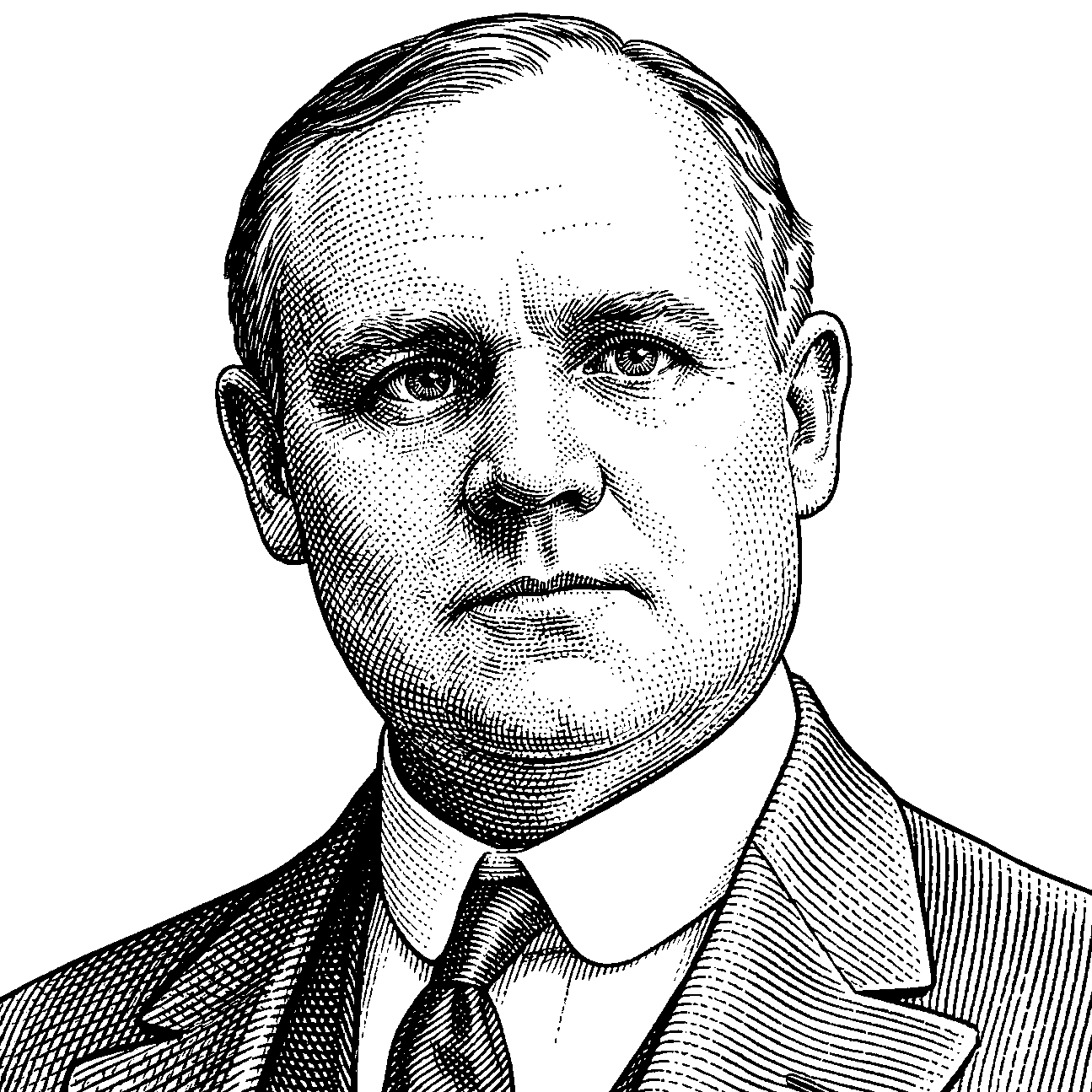
James E. Talmage

James E. Talmage

Some of the latest and highest achievements of man in the utilization of natural forces approach the conditions of spiritual operations. To count the ticking of a watch thousands of miles away; to speak in but an ordinary tone and be heard across the continent; to signal from one hemisphere and be understood on the other though oceans roll and roar between; to bring the lightning into our homes and make it serve as fire and torch; to navigate the air and to travel beneath the ocean surface; to make chemical and atomic energies obey our will⁠—are not these miracles? The possibility of such would not have been received with credence before their actual accomplishment. Nevertheless, these and all other miracles are accomplished through the operation of the laws of nature, which are the laws of God.

Articles of Faith, pages 222-223, Salt Lake City, Utah: Deseret News, 1899

Related Quotes

Gordon B. HinckleyGordon B. Hinckley

But in a larger sense this has been the best of all centuries. In the long history of the earth there has been nothing like it. The life expectancy of man has been extended by more than 25 years. Think of it. It is a miracle. The fruits of science have been manifest everywhere. By and large, we live longer, we live better. This is an age of greater understanding and knowledge. We live in a world of great diversity.

Steven DickSteven Dick

[Future religious thinkers] must be open to radically new conceptions of God, not necessarily the God of the ancients, nor the God of human imagination, but a God grounded in cosmic evolution, the biological universe, and the three principles: Why would a Messiah only come to us? Humans are likely not the center of anything. Nor the ultimate creation of God (likely not the head of the class when it comes to brainpower and intelligence) . . . A major effect of the concept of a natural God is that it has the capacity to reconcile science and religion. For those with a vested interest in the supernatural God of most standard religions, this may be too great a sacrifice for reconciliation. But consider the benefits. A natural God is an intelligence in and of the world, a God amenable to scientific methods, or at least approachable by them. A supernatural God incorporates a concept all scientists reject in connection with their science. For some, this may be precisely the point: that God cannot be, and should not be, approachable by science. But for Einstein and many other scientists (perhaps expressed in a different way for the latter) “the cosmic religious feeling is the strongest and noblest motive for scientific research.”

Boyd K. PackerBoyd K. Packer

When the servants of the Lord determine to do as He commands, we move ahead. As we proceed, we are joined at the crossroads by those who have been prepared to help us. They come with skills and abilities precisely suited to our needs.

More from James E. Talmage

It is reasonable to believe, in the absence of direct revelation by which alone absolute knowledge of the matter could be acquired, that, in accordance with God’s plan of eternal progression, advancement from grade to grade within any kingdom, and from kingdom to kingdom, will be provided for.

We believe in a God who is Himself progressive . . . whose perfection consists in eternal advancement . . . a Being who has attained His exalted state.

Miracles are commonly regarded as occurrences in opposition to the laws of nature. Such a conception is plainly erroneous, for the laws of nature are inviolable.

In conclusion, let it be said that science is undoubtedly entitled to a place in the curriculum of Association studies; it should have its right, but at the expense of nothing else that is good. Among our young people I consider scientific knowledge as second in importance only to that knowledge that pertains to the Church and Kingdom of God; such information is of greatest worth to us, because of greatest use.

Miracles cannot be in contravention of natural law, but are wrought through the operation of laws not universally or commonly recognized. Gravitation is everywhere operative, but the local and special application of other agencies may appear to nullify it—as by muscular effort or mechanical impulse a stone is lifted from the ground, poised aloft, or sent hurtling through space.