Authors
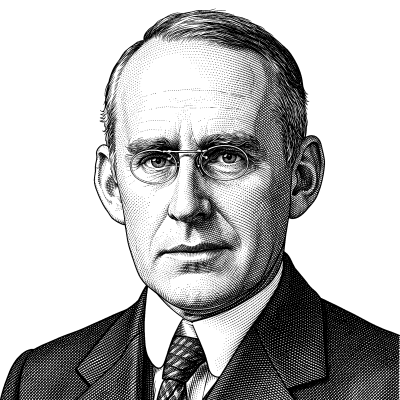
Arthur Eddington
Sir Arthur Stanley Eddington (1882-1944) was an English astrophysicist whose work gave the twentieth century its first observational proof of general relativity and its first physical account of how stars generate energy. Educated at Cambridge, he became director of the university’s observatory and spent his career translating Einstein’s abstract field equations into testable predictions about the behavior of light and matter. Eddington’s defining achievement came during the solar eclipse of 1919, when he led an expedition to the island of Principe to photograph starlight bending around the sun. The measurements matched Einstein’s prediction rather than Newton’s, and the result, announced to a world still recovering from war, made relativity a public fact almost overnight. Eddington followed that triumph with foundational work on stellar structure, showing how the balance between gravitational collapse and internal pressure explains a star’s size and luminosity, and he was among the first to argue that stars draw their energy from the fusion of hydrogen into helium, a claim later confirmed by nuclear physics. He also became one of the century’s most effective interpreters of science for lay readers, writing books that carried relativity and quantum theory to audiences well beyond the physics faculty. Eddington saw no need to partition the universe into separate realms for scientific law and ultimate meaning. He wrote of a reality standing behind both physical measurement and inner conscious experience, and treated the physicist’s equations as a partial reading of something larger, open rather than closed. That conviction, rare among physicists of his generation and expressed with unusual candor for a working Quaker scientist, gives his career a natural kinship with a Mormon transhumanist confidence that rigorous science and genuine faith investigate one continuous reality rather than opposing ones. His finding that mass bends light did more than confirm a theory. It demonstrated that the universe answers careful questions, which is itself a kind of standing invitation to keep asking them, including the questions that bear on human nature, intelligence, and destiny. Eddington framed his own search for a unified theory of physics as an attempt to show that the deepest structure of matter and the deepest structure of mind might turn out to be more alike than physics alone could prove, a hope that intelligence and understanding may themselves be built into the fabric of the universe rather than imposed on it from outside.
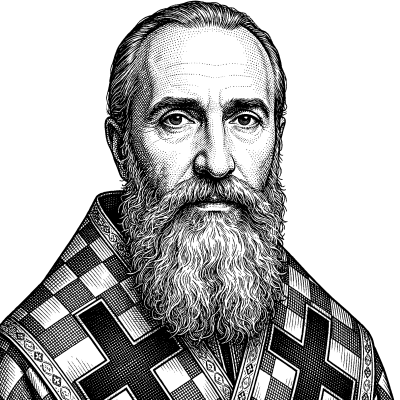
Athanasius
Athanasius of Alexandria (c. 296–373 AD) was one of the most influential theologians in Christian history, serving as the twentieth Pope of Alexandria and playing a decisive role in the development of Trinitarian doctrine. His lifelong defense of the Nicene Creed against Arianism earned him the title ‘Father of Orthodoxy,’ while his writings on the incarnation articulated a vision of human transformation that continues to resonate in Eastern Orthodox theology and beyond. Born in Alexandria, Egypt, Athanasius received a thorough education in Greek literature, philosophy, and Christian scripture. As a young deacon, he accompanied Bishop Alexander to the Council of Nicaea in 325 AD, where he witnessed the formulation of the creed that would define Christian orthodoxy. Three years later, at approximately thirty years of age, Athanasius succeeded Alexander as bishop of Alexandria—a position he would hold for forty-five years despite being exiled five times by various emperors sympathetic to Arianism. Athanasius ’ s most enduring theological contribution appears in his treatise On the Incarnation , written when he was still a young man. In this work, he articulated the doctrine of theosis—the belief that God became human so that humans might become divine. This concept, sometimes expressed as ‘God became man that man might become god,’ became central to Eastern Orthodox spirituality and has profound implications for understanding human potential and destiny. Throughout his tumultuous career, Athanasius faced opposition from Arian bishops, imperial persecution, and periods of exile in the Egyptian desert, Rome, and elsewhere. Yet he persisted in defending what he understood as apostolic faith against theological compromise. His friendship with the desert monks, including Anthony the Great, influenced his biography of Anthony, which became foundational for Christian monasticism and hagiography. Athanasius’s doctrine of theosis resonates profoundly with transhumanist themes. His vision of humanity’s potential for transformation and participation in divine nature anticipates contemporary discussions of human enhancement and transcendence. The idea that humans are destined for a radical elevation of their nature—not merely moral improvement but ontological transformation—connects ancient Christian theology with modern aspirations for human flourishing beyond current limitations.
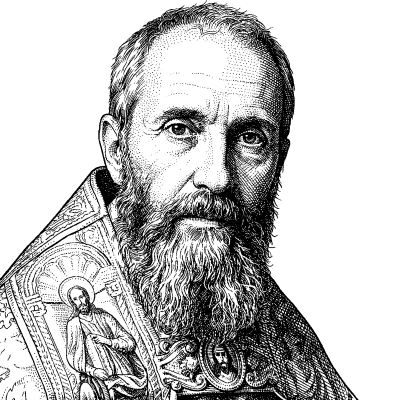
Augustine of Hippo
Aurelius Augustinus Hipponensis (354–430), commonly known as Augustine of Hippo or Saint Augustine, was a theologian, philosopher, and Bishop of Hippo Regius in Roman North Africa. He is widely regarded as one of the most influential figures in the development of Western Christianity and Western philosophy. Augustine’s major works include Confessions , a pioneering spiritual autobiography, and The City of God , a monumental defense of Christianity against pagan criticism following the sack of Rome. His theological contributions shaped doctrines on original sin, divine grace, predestination, and the nature of the Trinity. Before his conversion to Christianity, he explored Manichaeism and Neoplatonism, and his synthesis of Christian doctrine with classical philosophy profoundly influenced medieval thought, the Protestant Reformation, and modern philosophy alike. Augustine’s concept of deificatio (divinization) — the idea that humanity is called to participate in the divine nature — resonates with Mormon Transhumanist themes of theosis and the elevation of human potential. His emphasis on humanity’s restless longing for God (“Our hearts are restless until they rest in You”) speaks to a vision of human beings as fundamentally oriented toward transcendence. However, significant tensions exist between Augustine’s theology and Mormon Transhumanist thought. Augustine’s doctrine of original sin and total human depravity, his skepticism of unaided human will, and his emphasis on predestination stand in marked contrast to Latter-day Saint affirmations of human agency, moral capacity, and an optimistic anthropology. Additionally, Augustine’s commitment to creatio ex nihilo and the absolute ontological distinction between Creator and creature diverges from Mormon theology’s more materialist and continuity-oriented understanding of God and humanity. Nevertheless, Augustine’s enduring call to seek wisdom, his insistence that faith and reason are complementary, and his vision of humanity’s ultimate union with the divine ensure his lasting relevance to conversations at the intersection of faith, philosophy, and human flourishing.
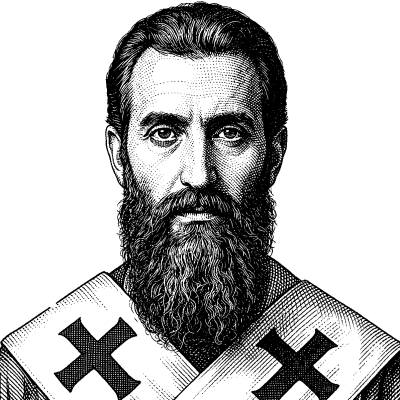
Basil the Great
Basil of Caesarea (c. 330–379), known as Basil the Great, was a bishop, theologian, and monastic reformer whose intellectual and institutional labors helped shape the foundations of Eastern Christianity. Born into a devout Christian family in Cappadocia (present-day Turkey), he studied at the finest schools of his age—Athens and Constantinople—before returning to establish a monastic community and eventually serving as Bishop of Caesarea from 370 until his death. Basil’s achievements were as practical as they were theological. He founded what historians regard as one of the earliest organized charitable complexes in the ancient world, a compound outside Caesarea that included a hospital, a hospice for travelers, and care facilities for the poor—a concrete expression of his conviction that faith without compassionate action is hollow. As a theologian, he contributed decisively to the articulation of Trinitarian doctrine and authored influential monastic rules that still govern communities of Eastern Christian monks today. Together with his brother Gregory of Nyssa and their friend Gregory of Nazianzus, he formed the Cappadocian Fathers, whose synthesis of Greek philosophy and Christian revelation became a cornerstone of classical theology. Basil’s deepest legacy may lie in his vision of human transformation through divine participation. In his treatise On the Holy Spirit , he described a soul indwelt by the Spirit as one that becomes spiritual itself, capable of “foreknowledge of the future, understanding of mysteries, apprehension of what is hidden”—a soul that advances through illumination toward what he did not hesitate to call “the being made God.” This is the doctrine of theosis : the idea that created intelligence, shaped by virtue and suffused with grace, can ascend toward genuine likeness to—and participation in—divinity. For Basil, that ascent was not a flight from the material world but a transformation of the whole person: mind, moral life, and communal practice included. His combination of rigorous intellectual formation, institutional care for the vulnerable, and fearless theological aspiration about humanity’s divine potential makes him a persistent and generative voice in any serious conversation about the relationship between intelligence, virtue, and the destiny of human beings.
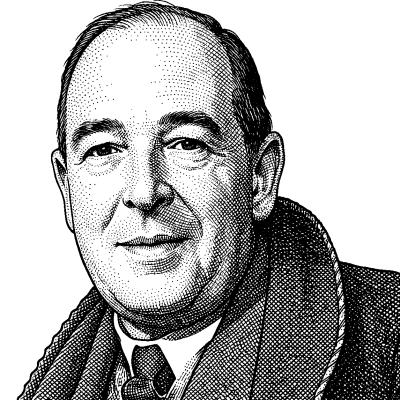
C.S. Lewis
Clive Staples Lewis (1898-1963) was a British literary scholar, novelist, and Christian apologist whose work shaped twentieth-century imagination across academic, literary, and theological registers. Born in Belfast, educated at Oxford, and later Professor of Medieval and Renaissance Literature at Cambridge, Lewis combined philological rigor with a gift for popular exposition that few peers matched. His academic contributions, including The Allegory of Love (1936) and English Literature in the Sixteenth Century (1954), established him as a leading medievalist. But his wider influence came through fiction and apologetics: The Screwtape Letters (1942), Mere Christianity (1952), The Problem of Pain (1940), The Great Divorce (1945), and the seven volumes of The Chronicles of Narnia (1950-1956). A member of the Inklings alongside J.R.R. Tolkien and Charles Williams, Lewis moved from youthful atheism to a self-described “reluctant” Christian conversion in 1931, an arc he traced in Surprised by Joy (1955). Lewis’s legacy resonates with Mormon transhumanist themes more deeply than his Anglican context might suggest. His doctrine of theosis —that the purpose of Christian life is to become “little Christs,” that God intends to make “the feeblest and filthiest of us into a god or goddess, a dazzling, radiant, immortal creature”—is among the most striking modern Protestant articulations of divinization, and it sits comfortably alongside Joseph Smith’s teaching that humanity’s destiny is to inherit the divine nature. His ecumenical instinct, expressed in the parable of Emeth in The Last Battle , suggests that sincerity and virtue can be received by Christ even when offered under other names—a posture friendly to syncretism and pluralism. Lewis was no technologist, and his suspicion of scientism in The Abolition of Man (1943) cautions against any easy equation of progress with goodness. Yet his moral seriousness, his confidence that human beings are unfinished creatures undergoing a long and sometimes painful transformation, and his insistence that the universe itself may have been created for the purpose of drawing creatures into divine life all converge with the central Mormon transhumanist conviction: that becoming gods, by grace and through participation, is the actual point.

Chris Benek is an American Presbyterian minister, theologian, and leading voice in the emerging field of Christian transhumanism. As a founding co-chair of the Christian Transhumanist Association and a prolific writer and speaker at the intersection of faith and technology, Benek has worked to establish theological frameworks for engaging artificial intelligence, enhancement, and the long-term future of humanity within the Christian tradition. Ordained in the Presbyterian Church (USA), Benek has served as an associate pastor in Florida while simultaneously developing a public ministry focused on technology ethics and Christian futurism. He has written extensively on the theological implications of artificial intelligence, arguing that AI systems may be capable of participating in God’s redemptive work—a position he has defended in venues ranging from academic conferences to popular media. He co-founded the Christian Transhumanist Association to provide an institutional home for Christians who believe that technological development, rightly ordered, is continuous with the Gospel’s call to heal, restore, and transform creation. Benek’s significance lies in his insistence that Christian faith is not a constraint on technological imagination but a motivating force for it. His willingness to ask whether artificial intelligence might itself be redeemed and enlisted in the work of redemption reflects a theological seriousness about the scope of Christ’s reconciling work—one that resonates with the Mormon transhumanist conviction that creation, intelligence, and transformation are inseparably linked. Across traditions, he and like-minded thinkers represent a growing recognition that the deepest questions about technology are also the deepest questions about what it means to be made in the image of a creative, loving God.
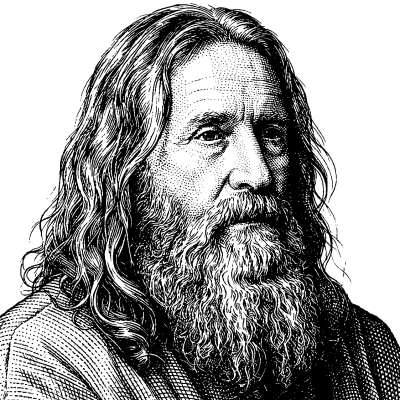
Clement of Alexandria
Clement of Alexandria (c. 150 – c. 215 CE) was an early Christian theologian and teacher whose synthesis of Greek philosophy and Christian faith made him one of the most intellectually ambitious figures of the patristic era. Born likely in Athens and educated across the Mediterranean world, he eventually settled in Alexandria—then the preeminent center of learning in the ancient world—where he led the Catechetical School and shaped the intellectual tradition of early Christianity. Clement’s major works— Protrepticus , Paedagogus , and Stromata —form a trilogy that moves the reader from conversion through moral formation toward deeper philosophical and spiritual knowledge. He drew freely from Plato, the Stoics, and Jewish wisdom literature, arguing that Greek philosophy was not an enemy of the Gospel but a preparatory gift, a kind of divine pedagogy for the Gentile mind. His vision of the gnostikos —the mature Christian who combines rigorous intellectual inquiry with devout practice—was a portrait of the fully integrated human being, one in whom reason and faith become indistinguishable. What gives Clement enduring significance is his unambiguous teaching that the purpose of human life is transformation into the divine. His own words carry the weight of this conviction: “The Word of God became a man so that you might learn from a man how to become a god.” This is not rhetorical flourish—it is a theological program. Clement understood salvation as an ongoing ascent, a journey from moral discipline through illuminated knowledge toward a state in which the human person becomes, in his phrase, “God-bearing and God-borne.” The redeemed, in his vision, are ultimately “called by the appellation of gods,” destined for “everlasting contemplation” alongside those perfected before them. This is theosis stated with unusual directness and intellectual confidence: divinity is the natural telos of an intelligence that cooperates with grace, learns earnestly, and loves deeply. For those who hold that human beings are meant to grow without limit—that intelligence, creativity, and moral aspiration are not merely useful traits but the very substance of our divine inheritance—Clement offers a patristic voice of striking resonance. He refused to separate the life of the mind from the life of the spirit, insisting that the same God who is Logos invites human beings into an ever-deepening participation in that reason and light. His is a theology not of passive redemption but of active, educable, transforming ascent.
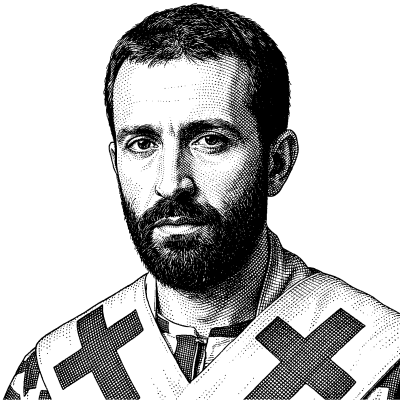
Cyprian
Cyprian of Carthage (c. 200–258 CE) was one of the most influential bishops and theologians of early Christianity, whose writings on ecclesiology, martyrdom, and the nature of the Church shaped Latin Christian thought for centuries. Born in Roman North Africa, likely to a wealthy pagan family, Cyprian converted to Christianity around 246 CE and rose rapidly to become Bishop of Carthage within two years. His episcopate was defined by crisis: he led his community through the Decian and Valerian persecutions, navigating fierce debates over how to treat Christians who had lapsed under imperial pressure. His treatises—among them On the Unity of the Church , On the Lapsed , On Mortality , and On Works and Almsgiving —combined pastoral urgency with theological precision, establishing principles of communal discipline, sacramental life, and episcopal authority that would echo through Western Christianity. He was martyred in 258 CE under the Emperor Valerian, becoming one of the most venerated figures in the early Church. Cyprian’s theological legacy is most vivid where it touches the question of human transformation. His conviction that Christ assumed the fullness of human nature so that humanity might ascend to share in the divine—captured in the axiom that what humanity is, Christ was willing to become, so that humanity might become what Christ is—places him in the ancient tradition of theosis, the teaching that the divine-human gap is not a fixed boundary but a trajectory of becoming. This vision of participation in the divine life, grounded in incarnation and sustained by community, finds deep resonance with the Mormon transhumanist intuition that human potential is genuinely open-ended, that the relationship between humanity and God is one of shared nature and increasing likeness rather than infinite ontological distance. Cyprian did not frame this hope in technological terms, but his insistence that moral transformation, communal practice, and the grace of Christ collaborate in making humanity more than it currently is speaks across centuries to anyone who takes seriously the possibility that the divine future of the human person is real, not merely symbolic.
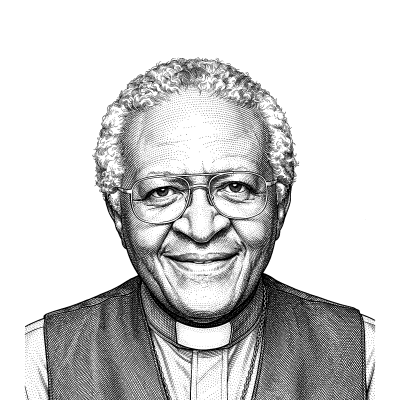
Desmond Tutu
Desmond Mpilo Tutu (1931-2021) was a South African Anglican archbishop who became one of the moral authorities of his century, leading nonviolent resistance to apartheid and later guiding his country through the painful work of reckoning with what apartheid had done. Born in Klerksdorp to a schoolteacher father and a domestic-worker mother, he trained first as a teacher before entering the priesthood, ordained in 1960. He became Bishop of Lesotho in 1976, then Bishop of Johannesburg, and in 1986 became the first Black Archbishop of Cape Town, using the pulpit and the press with equal skill to make apartheid’s injustice visible to a world that preferred not to look. Tutu’s resistance stayed deliberately nonviolent even as the system he opposed grew more brutal, a discipline that cost him surveillance, threats, and the revocation of his passport, and that earned him the Nobel Peace Prize in 1984. After apartheid fell, Nelson Mandela appointed him to chair the Truth and Reconciliation Commission, where he insisted that justice required truth-telling before it could require forgiveness, and that forgiveness, rightly understood, was not an erasure of harm but a costly act of repair. He also popularized the Zulu-rooted concept of ubuntu for audiences well beyond South Africa, teaching that personhood is not a private possession but something realized only through other people. That teaching, captured in his own words, that his humanity is bound up in others’ humanity, for people can only be human together, names a relational view of personhood that resonates with a Mormon transhumanist emphasis on growth achieved in community rather than isolation. Tutu held that every person carries the image of God, and that cruelty against one person wounds that image everywhere. His life’s work, holding truth and reconciliation together rather than letting either substitute for the other, offers a model of moral seriousness for any tradition that hopes human beings might yet become more fully what they were created to be.
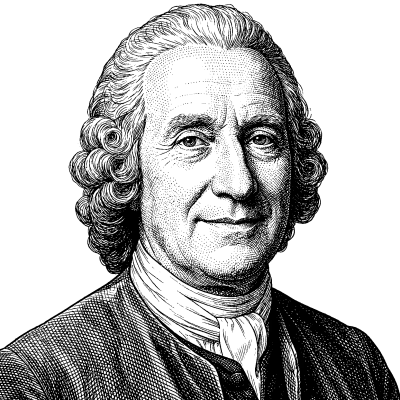
Emanuel Swedenborg
Emanuel Swedenborg (1688–1772) was a Swedish pluralistic scientist, philosopher, theologian, and mystic. His theological writings describe a detailed structure of the spiritual world and emphasize the importance of useful service. Born in Stockholm to a prominent family, Swedenborg was one of the most learned men of his age, making significant contributions to mining engineering, anatomy, and other sciences before turning to spiritual matters in his fifties. His theological works, including Heaven and Hell , describe the afterlife as a realm of continued activity, purpose, and progression. His emphasis on useful service and continued growth after death has influenced many religious movements, including some aspects of Latter-day Saint thought about the nature of heaven and eternal progression.